
At first glance, the idea of ‘safe spaces’ feels a bit zen and yoga retreat. Maybe it’s fast becoming an over-used phrase? But it’s very hard to do anything when you don’t feel safe, or comfortable – hence the phrase ‘outside my comfort zone’.
If you are taking on a fundraising event that is outside your comfort zone you expect to feel challenged. That’s the whole point, right? What about the challenge of conflict-resolution? How many of us when faced with knowing we disagree with someone about something go to one of the extremes; either total avoidance (“It will sort itself out…”) or allowing things to boil over into an unscheduled shouting match? It’s difficult to pause and intentionally seek out the safe space to work through differences, particularly if it’s someone who you are no longer in a relationship with but emotions are still running high.
The Nobel Peace Center book1 from which the eight principles are taken does read a little bit like a mediation textbook at principle 2. If you have worked with me in mediation, you will recognise some of the discussions we have prior to mediation about what a safe space means for you. Family mediation can take place in so many formats. I will seek to understand what lies behind a person’s stated preference and what clues that gives as to their emotional readiness and where they are up to in their separation journey. When someone flinches at the thought of their former partner being present even by video call that person is not in a safe space. Without a safe space, dialogue (principle 1) can’t be open and honest.
When I am working with separating couples, I ask each of them separately (at their MIAM) whether their preference would be to mediate online, in person, shuttle, hybrid etc. A safe space might mean meeting online. Many clients tell me they felt reassured by being about to log on from their home safe spaces or reassured by the absence of bumping into someone before/after the safe space of the mediation session. When clients choose to mediate in person there are more practical considerations like the room and venue, the seating arrangements. When I meet with children in person as part of child inclusive mediation, I try to send them a photo of the room we will use (and a photo of me so there are no nasty shocks😉).
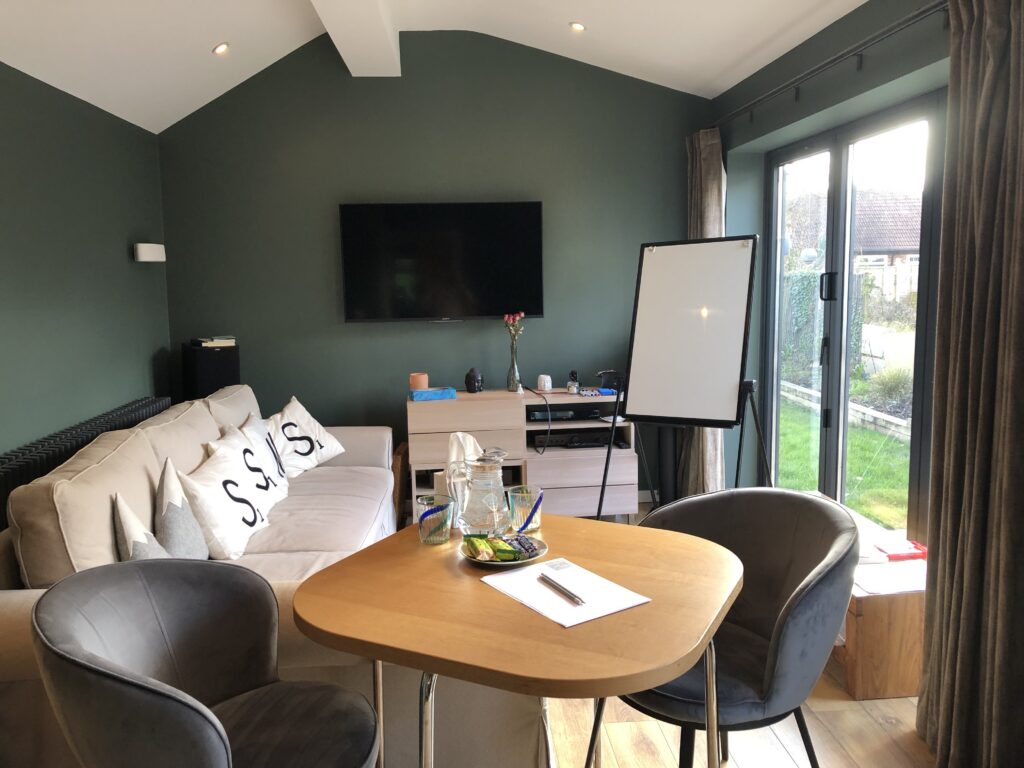
Taking care with the practicalities will help create a safe space for dialogue, just as taking care with your diet and fitness will help you complete a sporting challenge. But on its own a well set up room or Zoom doesn’t create a safe space. The Nobel Peace Center suggests that the facilitator (mediator) must be aware of and manage any imbalance of power in the participants’ relationship. For some participants there is an obvious imbalance of power – a space they inhabit together would not be safe, or suitable for dialogue. For some participants the imbalance is much more subtle. A mediator makes assessments continually as to whether they can create a safe space and what is needed for these particular participants.
As the Nobel Center suggests safe spaces are not only the physical environment for the dialogue, but a space where “… people are treated as equals and with respect, openness and curiosity.” Participants should expect all this from their mediator, but they should also try to behave like this towards each other regardless of the issues they are working through. A safe space feels like the starting point, the building block from which everything else follows. The second Nobel principle reminds us that this space is created; through careful planning, adaptation and effort. Not unlike the training for an ‘out of comfort zone’ fundraising challenge.
- From the book Those Who Listen, Change the World – The Little Book on Dialogue from the Nobel Peace Center ↩︎

